Introduction:
The pharmaceutical industry is facing an alarming trend: a dramatic increase in drug recalls. In 2022 alone, defective pharmaceutical units hit a five-year high, with January 2023 marking a significant spike in recalls– over 11.88 million units impacted due to critical deviations from Good Manufacturing Practices (GMP). The fallout from such quality lapses ranges from mislabeling and vial breakage to more severe issues like sterility concerns the top cause of recalls for the first time in over six years.
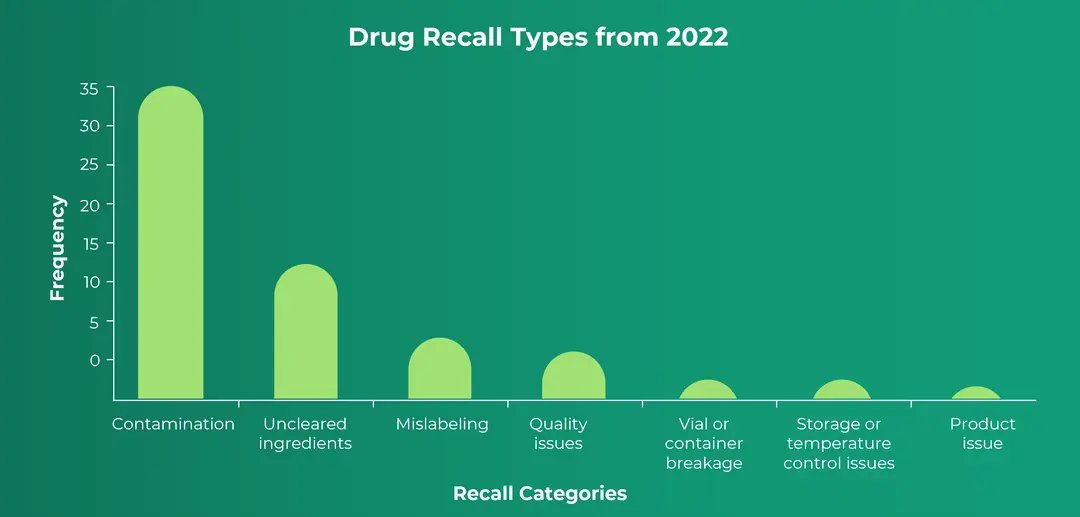
Drug recalls damage more than just finances; they erode trust, tarnish reputations, and invite legal scrutiny. The question we must ask then is – What happened to the high standards of pharmaceutical manufacturing, and how can we restore them?

The Importance of Quality in Pharmaceutical Manufacturing
Quality control in pharmaceutical manufacturing is not just a regulatory requirement – it is also central to ensuring drug safety and efficacy. Its direct impact on a drug extends from development to delivery, affecting everything from patient health to the drug's market approval.
GMP is the backbone of quality assurance. It covers all aspects of production, from the raw materials, facilities, and equipment to staff training and personal hygiene. Following these guidelines ensures that products are consistently produced and controlled according to quality standards. These include establishing a robust quality management system (QMS):
Quality Planning
Quality planning is the foundational stage of a QMS. It defines the quality standards and requirements for products or services and identifies the necessary resources to meet them. Organisations set quality objectives, determine the required procedures, and consider stakeholder expectations, legal standards, and organisational success metrics.
Benchmarking Quality in Pharma Manufacturing
In response to overseas incidents linked to Indian-made drugs, the government has increased oversight of pharmaceutical plants to boost the industry's reputation. New guidelines mandate thorough testing and sample retention to ensure drug safety and efficacy before distribution. While it is a welcome step in the right direction, what are industry players doing to set up benchmarking standards for themselves?
A few key performance indicators in pharma manufacturing could be:
Quality Control
The next phase, quality control, involves assessing whether the quality plan is achievable through rigorous physical inspection and testing. This stage ensures all product elements meet specified requirements and identifies necessary corrections. Utilising document management software, teams can effectively manage and analyse data through tools like histograms, run charts, and cause-and-effect diagrams, ensuring adherence to standards throughout the manufacturing process.
Recent cGMP updates have increased the responsibility of pharmaceutical companies to ensure quality standards throughout their products' lifecycles – especially for companies with fully outsourced manufacturing. These systems should promote transparency across the product lifecycle and guide supply chain partners with a risk-based quality management approach. Effective QMS practices include:
Quality Assurance
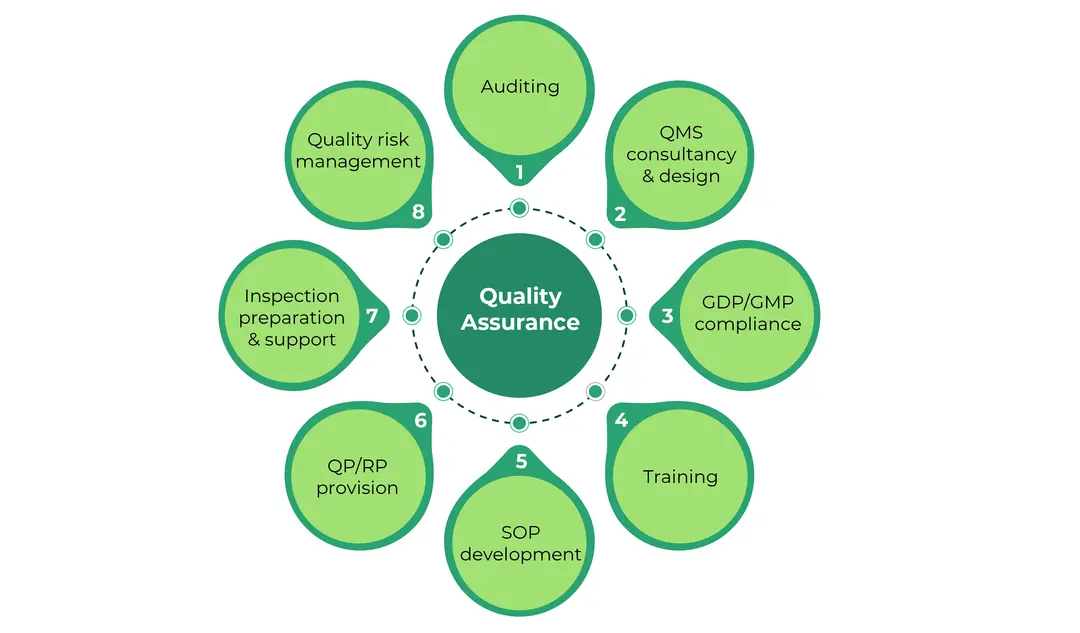
Quality Assurance (QA) encompasses all aspects that could influence the quality of pharmaceutical products. The goal is to ensure that medications are safe, effective, and compliant with regulations, thus protecting patients from defective or contaminated drugs. Pharmaceutical Quality Systems (PQS) support this through eight pillars, outlined below:
Quality Improvement
Reviewing results and planning for improvement are key steps after the quality management cycle. Continual staff training ensures adherence to procedures, safeguarding the manufacturing process. Regular refinement of processes and products focuses on compliance and customer satisfaction, ultimately enhancing quality, building trust, and increasing profitability.
Leveraging Technology for Better Quality Control
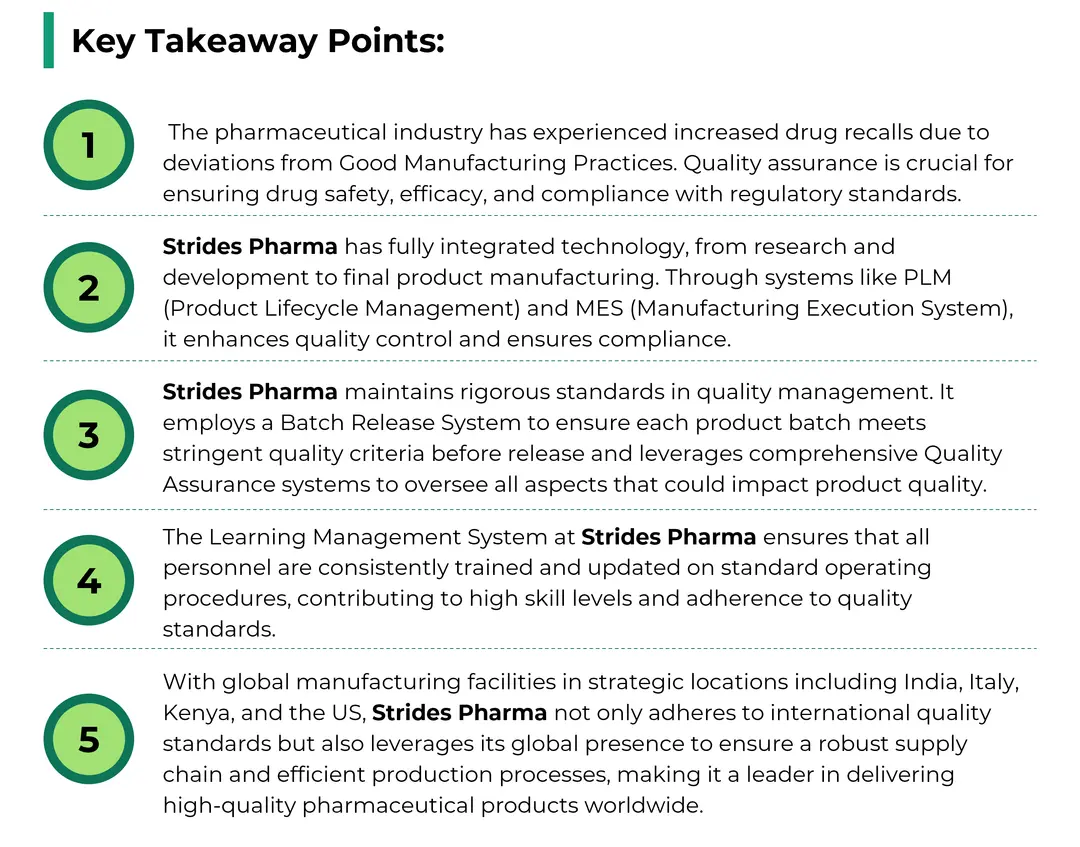
Strides Pharma has implemented a strong IT program to create a highly efficient and compliant organisation by integrating technology throughout its manufacturing process. This seamless integration enhances quality control at every production stage, from R&D to the final product.
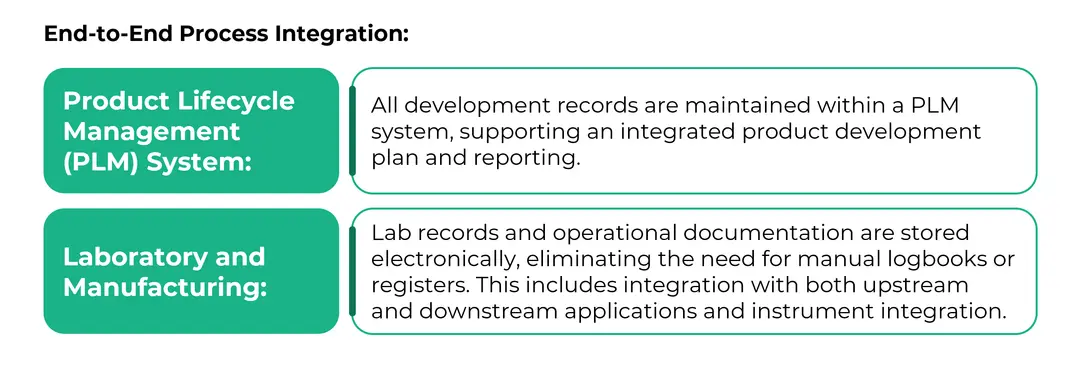
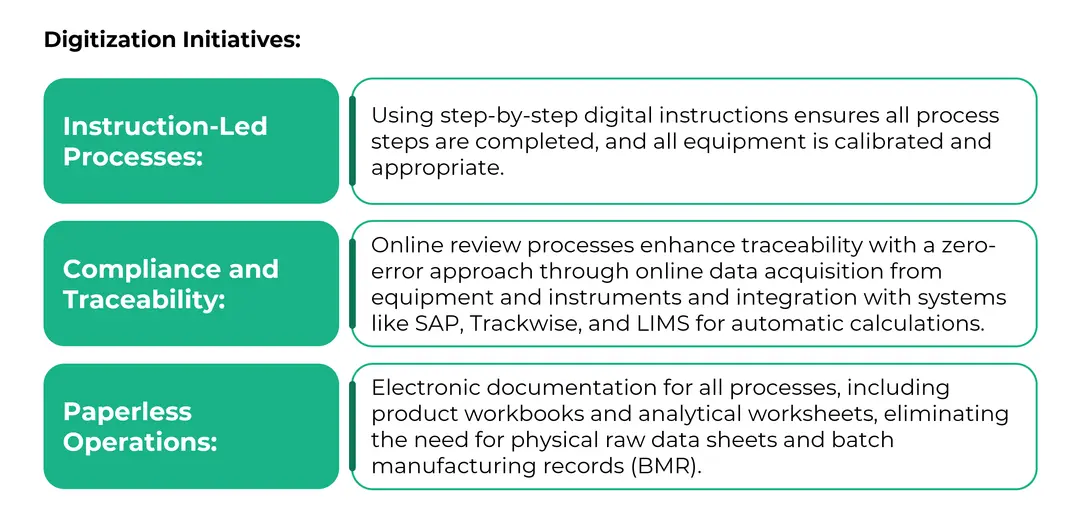
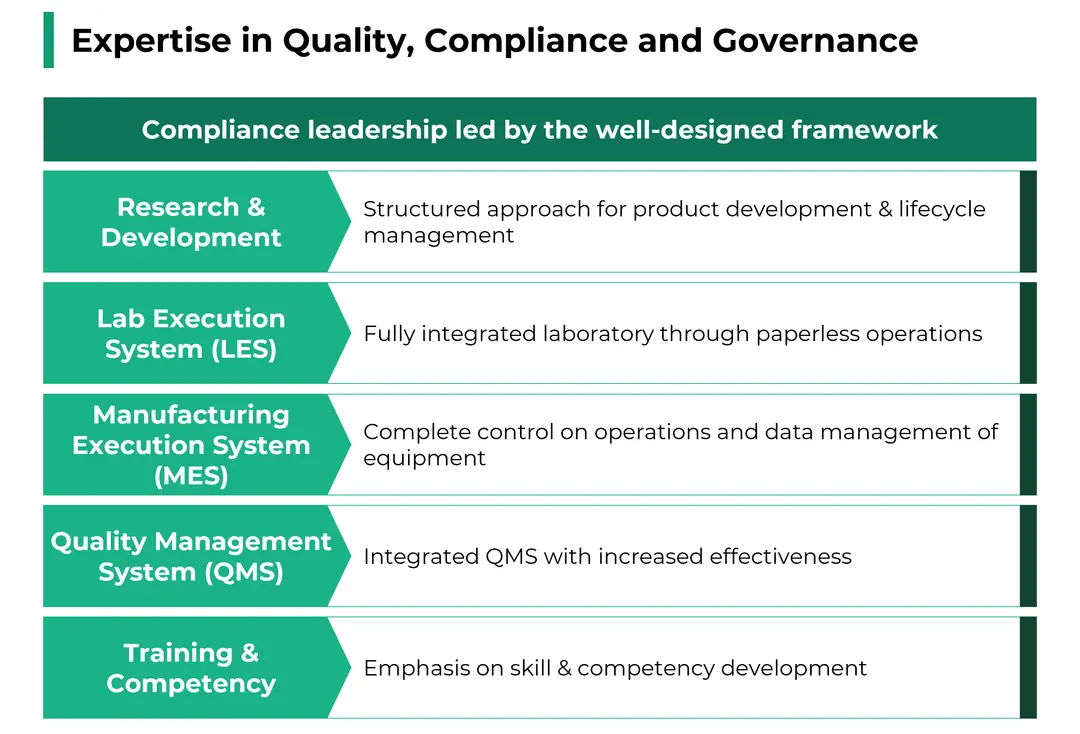
These initiatives ensure that Strides Pharma maintains the highest quality and compliance standards, leveraging technology to minimiseerrors and streamline operations.
Conclusion:
As we navigate the complexities of pharmaceutical manufacturing, it is clear that while maintaining rigorous quality standards fulfils regulatory compliance, it also serves as a vital pathway inrebuilding trust –a much-needed outcome today!
Strides Pharma exemplifies this commitment, leveraging state-of-the-art technology and comprehensive quality practices to ensure the highest standards across all stages of production. With robust R&D capabilities and a global manufacturing presence in India, Italy, Kenya, and the US, Strides Pharma delivers quality products in over 100 countries.
For a partnership that emphasisesreliability and excellence, reach out to Strides Pharma–where quality meets innovation and trust is renewed.
Click here to get in touch ! www.synergice.co