Introduction
The pharmaceutical industry has faced several challenges in recent years, driven by the increasing complexity of drug formulations and stringent regulatory demands.
With the rise of biologically derived molecules (biologics) and complex small molecules, the average number of synthetic steps required to produce active pharmaceutical ingredients (APIs) has nearly doubled over the past twenty years, from 8 to 14 steps.
Regulatory bodies like the FDA and EMA impose rigorous standards to ensure drug safety and efficacy, requiring extensive documentation, compliance checks, and robust quality management systems. While these measures are essential for maintaining high quality, they can sometimes delay innovation and increase costs.
While Industry 4.0 concepts like digital transformation and smart factories, continuous manufacturing, personalised medication, and advanced supply chain management offer technology-based solutions to these challenges, the need for efficient, reliable, and reproducible manufacturing processes remains crucial.
This is why design concepts such as Quality by Design (QbD) and Design of Experiments (DoE) are increasingly adopted across the pharma industry.
Quality by Design (QbD) in Pharmaceuticals
A. Fundamentals of QbD
Quality by Design (QbD) Definition: QbD is a systematic approach to drug development that begins with predefined objectives. It emphasises product and process understanding and process control based on sound science and quality risk management.
B. A Systematic Approach to Development in Pharma
QbD involves designing pharmaceutical products to meet patient needs and performance requirements. It focuses on understanding the impact of raw materials and process parameters on product quality, identifying sources of variability, and controlling them through appropriate strategies. Continuous monitoring and updating of the process ensure consistent quality over time.
“Quality by Design (QbD) is essential in the pharmaceutical industry as it shifts the focus from end-product testing to building quality into every stage of the development process. At Strides Pharma, this proactive approach helps us create reliable and effective medications, ensuring patient safety and satisfaction.”
—Mr. Swamy KN,
Global Analytical Development Services Historical Context and Evolution
C. Historical Context and Evolution
The roots of QbD can be traced back to the principles of the design of experiments (DoE) developed by R.A. Fisher in the 1920s and 1930s and further advanced by G. Box in the mid-20th century. The concept gained popularity in the 1990s, thanks to the efforts of J. Juran, who emphasised the importance of designing quality products from the outset.
The idea of QbD in pharma emerged to address inefficiencies in traditional drug development methods.
“[The process is ]costly, wasteful, and encouraging industry to conduct more tests and file more data than needed [leading] to drug shortages, slower drug development, and intensive regulatory oversight, ” Janet Woodcock, FDA deputy commissioner, October 2005, at a workshop sponsored by the FDA and the American Association of Pharmaceutical Scientists (AAPS)."
The FDA defines QbD as "a systematic approach to development that begins with predefined objectives and emphasises product and process understanding and process control, based on sound science and quality risk management."

They introduced the Pharmaceutical Quality Assessment System (PQAS) soon after – a system aimed to encourage the adoption of modern pharmaceutical development approaches, leading to a more efficient and flexible manufacturing sector capable of producing high-quality drugs with minimal regulatory oversight.
The FDA's push for QbD was part of a broader initiative to modernise pharmaceutical manufacturing and regulatory processes, outlined in the document "Pharmaceutical CGMPs for the 21st Century: A Risk-Based Approach.“
They issued guidance documents to help companies implement Quality by Design (QbD) principles throughout the product lifecycle, especially during product development. Companies are encouraged to include basic QbD elements in their Abbreviated New Drug Applications (ANDA) and progressively transition to more comprehensive QbD filings as they gain experience and knowledge from successful and unsuccessful implementations.
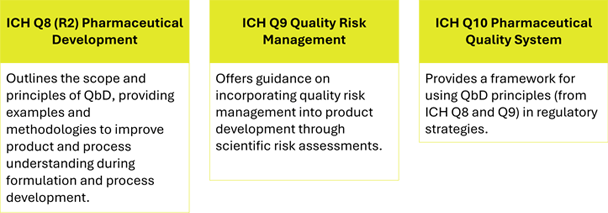
D. Guidance Documents and Standards
E. Benefits of QbD
Is QbD Necessary? While not mandatory, QbD is highly recommended and considered good practice by regulatory agencies and industry experts. It offers a systematic, science-based approach to ensuring product quality throughout the lifecycle.
“The benefits of Quality by Design (QbD) are immense. It enhances product quality, reduces risks, and ensures regulatory compliance. By integrating QbD into our operations at Strides Pharma, we can deliver high-quality generics that consistently meet the expectations of our patients and regulatory bodies across Europe.”
— Dr. Anil Kumar UR,
AVP-Analytical Development
Benefits of Implementing QbD:
• Enhanced Understanding: Promotes a deeper understanding of product CQAs, manufacturing processes, and associated risks, enabling better control and mitigation.
• Consistent Product Quality: Ensures consistency and reliability in product quality by designing quality into the product and process from the beginning.
• Risk Reduction: Incorporates risk assessment and mitigation strategies to address potential risks early, improving patient safety.
• Process Optimization: Encourages optimization of manufacturing processes by identifying CPPs and establishing a design space, leading to improved efficiency, reduced waste, and cost savings.
• Regulatory Compliance: Aligns with regulatory expectations and guidelines, helping meet regulatory requirements through a thorough understanding of product quality and a robust control strategy.
• Continuous Improvement: Emphasizes ongoing monitoring, data analysis, and feedback loops for process refinement and optimisation throughout the product lifecycle.
F. Key Components of QbD
“Key Quality by Design (QbD) components include a thorough understanding of the product and process, identifying critical quality attributes, and implementing control strategies. At Strides Pharma, we prioritise these elements to ensure that our development processes are robust and our products meet the highest quality and efficacy standards.”
— Mr. Sudharshan
AVP-Formulation Development
1. Quality Target Product Profile (QTPP)
The QTPP is a prospective summary of the quality characteristics of a drug product, designed to ensure the desired quality while considering the safety and efficacy of the drug. It includes:
• Intended use in a clinical setting
• Route of administration
• Dosage form and delivery systems
• Dosage strength(s)
• Container closure system
• Therapeutic release or delivery attributes affecting pharmacokinetics
• Drug product quality criteria (e.g., sterility, purity, stability, and drug release)
A well-defined QTPP forms the basis of the design for the product's development and helps identify the Critical Quality Attributes (CQAs).
Strides Pharma’s Rigorous QTPP Framework for Softgel Capsules in Arthritis Treatment
Strides Pharma ensures the highest quality in its softgel capsules for arthritis treatment through a meticulously defined QTPP framework. The capsules are delivered orally and relieve mild to moderate acute pain in adults. They ensure bioequivalence based on the 90% CI of Diclofenac in plasma.
-
• The capsules are designed for oral administration with an immediate release mechanism, matching the reference product's dosage strength and therapeutic equivalence.
-
• The softgel capsules are translucent, pale yellow, and liquid-filled, adhering to patient acceptability and trade dress consistency.
-
• Physical characteristics like a fill weight of 430 mg and an oval shape ensure patient compliance. The product disintegrates in no more than 30 minutes, maintaining quality standards.
-
• Stability is verified under various conditions per ICH guidelines, and microbial limits meet pharmacopoeia safety criteria.
-
• Chemically, the softgels conform to identification standards, maintain a 90-110% label claim assay, and adhere to specific impurity limits, ensuring both clinical effectiveness and safety.
-
• The dissolution profile and dosage uniformity further guarantee effectiveness, while residual solvents comply with USP <467> requirements.
-
• Packaged in 100 HDPE bottles, the capsules are stored at 25°C with permissible excursions, ensuring stability and patient safety. Each capsule’s label claim matches the reference product, assuring consistent therapeutic outcomes.
2. Critical Quality Attributes (CQAs)
CQAs are the physical, chemical, biological, or microbiological properties or characteristics of the drug product that should be within an appropriate limit, range, or distribution to ensure the desired product quality. Examples include:
• Identity
• Assay
• Content uniformity
• Degradation products
• Residual solvents
• Drug release or dissolution
• Moisture content
• Microbial limits
• Physical attributes (e.g., colour, shape, size, odour)
Criticality is primarily based on the potential harm to the patient if the attribute is outside the acceptable range.
Precision in Production: Identifying CQAs for Softgel Capsules at Strides Pharma
Strides Pharma has identified several Critical Quality Attributes (CQAs) for their softgel capsules, crucial for ensuring safety, efficacy, and product stability:
Assay:
• Maintaining between 90% and 110% of the label claim
• Critical for safety and efficacy
Related Substances:
• Diclofenac Related Compound A (NMT 0.5%)
• Any highest unknown impurity (NMT 0.5%)
• Total impurities (NMT 2.0%)
• Identified as CQAs due to their impact on safety
pH Level:
• Maintained at 6.5 ± 2
• Crucial for product stability throughout its shelf life
Dissolution Rate:
• At least 70% of the labelled amount to dissolve in 30 minutes
• Essential for drug release and pharmacological action
The appearance, odour, shape and size are not considered CQAs as they do not directly impact safety and efficacy but ensure patient acceptability and compliance.
Attributes like disintegration time, residual solvents conforming to USP <467>, and microbial limits meeting pharmacopoeia criteria are not considered CQAs as standard quality management systems control them and do not significantly impact formulation and process variables.
Table : Initial Risk Assessment of Formulation Variables on CQAs
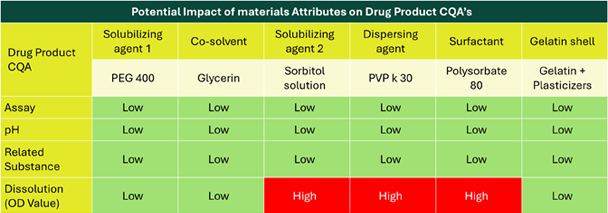
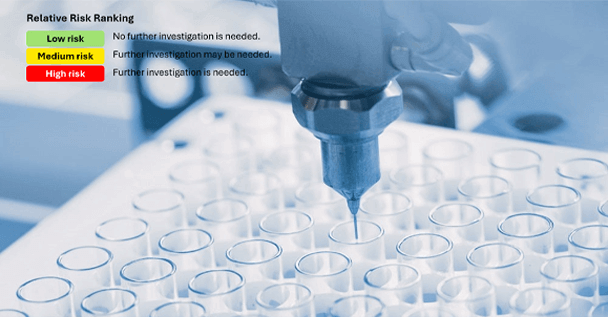
Relative Risk Ranking
-
Low risk: no further investigation needed.
-
Medium risk: further investigation may be needed.
-
High risk: further investigation is needed.
3. Critical Process Parameters (CPPs)
CPPs are input variables or manufacturing process conditions that can be directly controlled. These parameters significantly impact CQAs and must be monitored or controlled to ensure the desired quality of the product. Examples include:
• Temperature
• Process time
• Column flow rate
• Reagent concentration
• Buffer pH

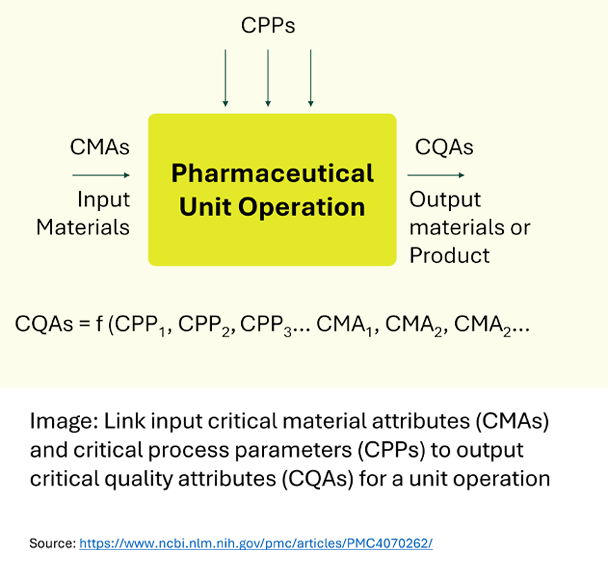
Table: CPP assessment on CQA for softgel capsules
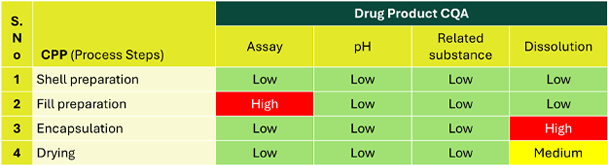
Relative Risk Ranking
-
Low risk: no further investigation is needed.
-
Medium risk: further investigation may be needed.
-
High risk: further investigation is needed.
4. Control Strategy and Risk Management
A control strategy is a planned set of controls derived from understanding the current product and process. It ensures consistent process performance and product quality. Controls can include:
• Parameters and attributes related to drug substances and drug product materials
• Facility and equipment operating conditions
• In-process controls
• Finished-product specifications
• Monitoring frequency and methods
5. Real-Time Release (RTR)
RTR involves evaluating and ensuring the quality of an in-process or final product based on process data. This includes assessing material attributes through direct or indirect process measurements and evaluating critical process parameters and their effects on in-process material attributes.
6. Design Space
Design Space refers to the multidimensional combination and interaction of input variables (e.g., material attributes) and process parameters that have been demonstrated to assure quality. Working within a design space is not considered a change requiring regulatory approval, while movement outside it typically requires a regulatory post-approval change process.
By integrating these components, QbD ensures a high level of quality assurance, minimising the need for extensive regulatory oversight and fostering continuous improvement throughout the product lifecycle.
G. The QbD Framework in Practice
Quality by Design (QbD) is most effective when incorporated early in the drug development process, particularly during the manufacturing process and formulation development.
“Implementing Quality by Design (QbD) can be challenging due to the need for extensive data collection and analysis and the integration of complex control strategies. Despite these challenges, Strides Pharma is committed to QbD because it ultimately leads to better product quality and more efficient regulatory approval processes.”
—Mr. Swamy KN
Global Analytical Development Services

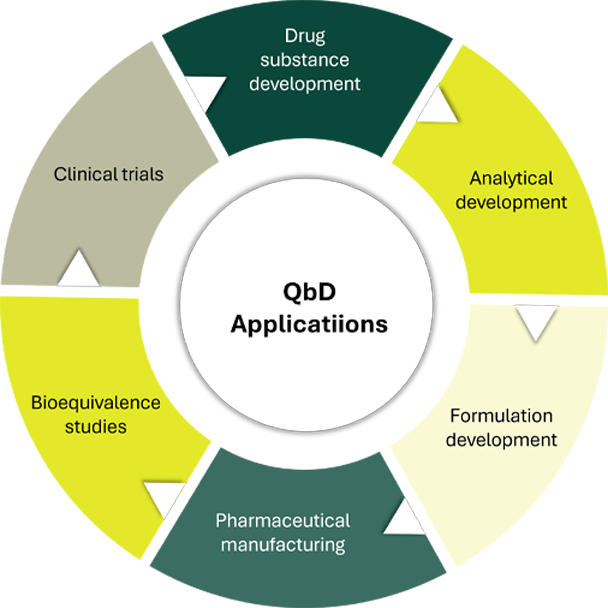
Image source: Pharmaceutical QbD: Omnipresence in the product development lifecycle
Key stages for QbD application include:
1. Preclinical Development:
• Apply QbD principles to formulation development and process design.
• Identify Critical Quality Attributes (CQAs) and Critical Material Attributes (CMAs) based on desired product characteristics.
• Conduct initial risk assessments to understand potential risks and challenges.
2. Formulation Development:
• Use QbD to understand the impact of formulation factors on product attributes.
• Employ statistical frameworks to vary formulation components and optimise their effects on CQAs systematically.
• Explore the design space to identify acceptable ranges of formulation variables for desired product quality.
3. Process Design:
• Developing the Manufacturing Process: Based on the CQAs, the next step is to design a manufacturing process that can reliably produce a product that meets these attributes.
• Identifying Critical Process Parameters (CPPs): These are the key variables affecting the production process, which must be controlled to ensure CQAs are consistently met.
4. Process Optimization:
Real-time process monitoring and trending using Process Analytical Technology (PAT) reduces the analysis burden and improves product quality.
• Experimental Design: Statistical tools like Design of Experiments (DoE) can be used to explore the relationships between process parameters and CQAs systematically. This helps optimise the process to achieve the desired product quality.
• Risk Assessment: Identifying potential risks to product quality and implementing strategies to mitigate them.
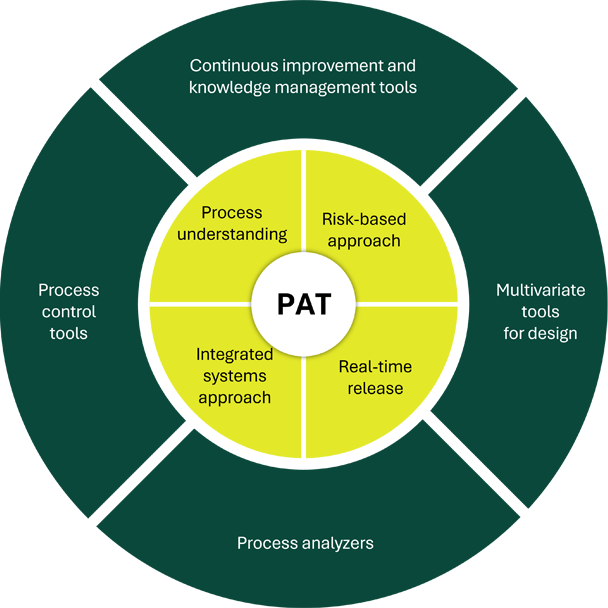
Image source: https://www.mt.com/in/en/home/applications/L1_AutoChem_Applications/L2_PAT/quality-by-design.html
5. Scale-Up and Validation:
• Scaling Up Production: Transitioning from laboratory-scale production to full-scale manufacturing, ensuring the process is reproducible at a larger scale.
• Process Validation: Demonstrating that the manufacturing process consistently produces products that meet all quality requirements.
6. Commercial Production:
• Ongoing Monitoring: Continuously monitoring the production process to ensure it remains in control and produces high-quality products consistently.
• Continuous Improvement: Using data from ongoing monitoring to identify opportunities for further process improvements.
Design of Experiments (DoE)
DoE originated in the early 20th century with the work of Sir Ronald A. Fisher, who developed the foundation for modern statistical experimental design. His randomisation, replication, and blocking principles have been integral in many scientific disciplines, including agriculture and engineering. In pharmaceutical R&D, DoE is used extensively to optimise drug formulations, develop robust manufacturing processes, and ensure quality by design (QbD).
DoE is a critical tool in the pharmaceutical industry- used to optimise formulations and
processes, enhance product quality, and ensure regulatory compliance.
A. Introduction to DoE
Design of Experiments (DoE) is a statistical methodology used to plan, conduct, analyse, and interpret controlled tests to evaluate the factors that control the value of a parameter or group of parameters. It provides a systematic approach to understanding multiple variables' influence and interactions on a particular outcome.
B. Principles and Methodologies
1. Factorial Designs: Explore all possible combinations of factors and levels.
2. Fractional Factorial Designs: Evaluate a subset of possible combinations, useful when full factorial designs are impractical.
3. Response Surface Methodology (RSM): Optimize processes with a curved response surface, often used for fine-tuning.
4. Taguchi Designs: Robust designs that reduce variability without eliminating the causes.
C. Planning and Conducting Experiments:
1. Defining Objectives: Clear objectives guide the selection of factors, responses, and the type of experimental design.
2. Selecting Factors and Response Variables: Factors are manipulated, while response variables measure outcomes.
3. Randomisation and Replication: Randomization reduces bias, and replication increases the reliability of results.
D. Statistical Tools and Analysis Techniques:
1. Analysis of Variance (ANOVA): Determines the significance of factors.
2. Regression Analysis: Models the relationship between factors and responses.
3. Optimisation Algorithms: Identify the best settings for factors to achieve desired outcomes.
E. Applications of DoE in Pharma
1. Optimisation of Formulation and Process Parameters: DoE helps identify the optimal combination of ingredients and process conditions to achieve desired product characteristics, such as stability, bioavailability, and efficacy.
2. Identifying Critical Factors Affecting Product Quality: By systematically varying multiple factors, DoE can determine which factors significantly impact product quality and must be controlled tightly.
F. Benefits of DoE
1. Efficient Experimentation with Minimal Resources: DoE allows for the investigation of multiple factors simultaneously, reducing the number of experiments needed compared to one-factor-at-a-time (OFAT) approaches.
2. Comprehensive Understanding of Interactions Between Variables: DoE reveals interactions between factors that may not be evident when factors are varied individually, providing deeper insights into the process.
3. Accelerated Development Timelines and Reduced Costs: By optimising processes and formulations efficiently, DoE can significantly shorten development timelines and reduce associated costs, leading to faster time-to-market for new products.
By leveraging the principles and methodologies of DoE, pharmaceutical companies can comprehensively understand their processes and improve overall efficiency and product quality.
Integrating QbD and DoE in Pharmaceutical Development
Synergy Between QbD and DoE
Quality by Design (QbD) and Design of Experiments (DoE) are complementary methodologies that, when integrated, provide a robust framework for pharmaceutical development. QbD focuses on systematically building quality into products, while DoE offers a statistical method for optimising and understanding the influence of various factors on product quality. Together, they enhance the development process, ensuring consistency, efficiency, and regulatory compliance.
“Design of Experiments (DoE) offers significant benefits by allowing us to investigate the effects of multiple factors on a process systematically. At Strides Pharma, DoE enables us to optimise formulations and processes efficiently, reducing development time and costs while ensuring high product quality.”
— Mr. Swamy KN,
Global Analytical Development Services

How DoE Complements QbD Principles
DoE supports QbD by providing the experimental framework to identify and control Critical Quality Attributes (CQAs) and Critical Process Parameters (CPPs). It allows for systematically investigating the effects of multiple variables, optimising processes and formulations to achieve the desired quality. By using DoE within the QbD framework, pharmaceutical developers can:
• Identify Key Variables: Determine which factors significantly impact CQAs and CPPs.
• Optimise Processes: Find the optimal settings for process parameters to ensure high product quality.
• Understand Interactions: Reveal interactions between variables that might not be apparent with one-factor-at-a-time (OFAT) experiments.
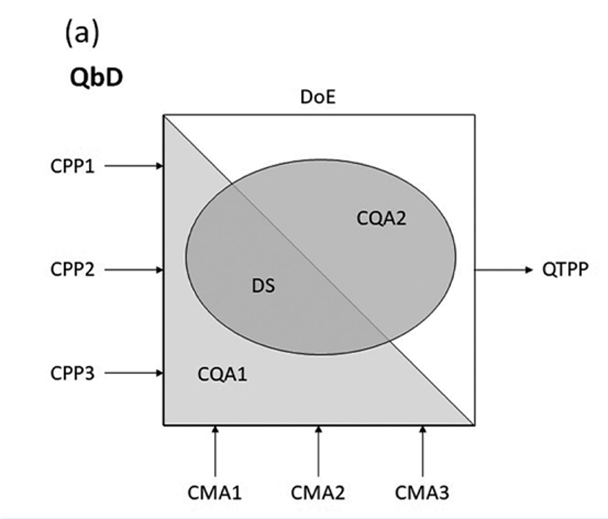
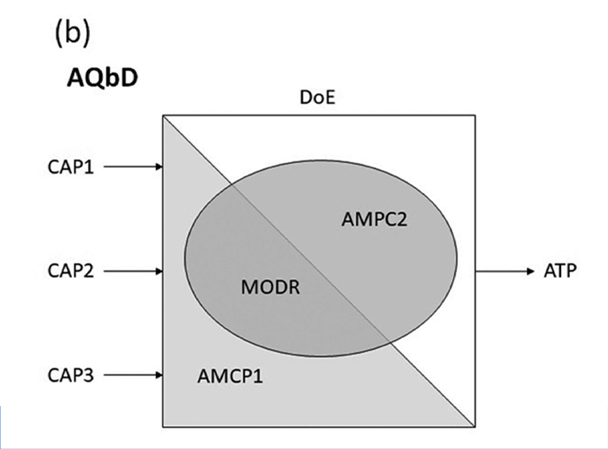
Figure: Schematic diagram of the steps for implementing pharmaceutical QbD (a) and analytical QbD (b).
Image source: https://www.scielo.br/j/bjps/a/zwwMpgN95HsPkzTG9B5FpWg/?lang=en#ModalFigf1
Best Practices for Integrating QbD and DoE in the Development Process
1. Early Adoption: Implement QbD and DoE from the early stages of drug development to ensure comprehensive understanding and control of processes and formulations.
2. Multidisciplinary Teams: Assemble teams with expertise in statistics, process engineering, and pharmaceutical sciences to leverage the full potential of QbD and DoE.
3. Continuous Monitoring: Use real-time data collection and analysis to refine and optimize processes continually.
Overcoming Common Challenges and Pitfalls
“One of the challenges of implementing Design of Experiments (DoE) is the complexity of experimental designs and the need for advanced statistical knowledge. However, at Strides Pharma, we invest in training and resources to overcome these challenges, leveraging DoE to drive innovation and ensure the reliability of our products.”
— Mr. Swamy KN,
Global Analytical Development Services
1. Complex Data Management: Use integrated software solutions to handle complex data sets efficiently.
2. Regulatory Compliance: Ensure thorough documentation and alignment with regulatory guidelines to facilitate smooth approvals.
3. Training and Expertise: Train team members to proficiently use QbD and DoE tools and methodologies.
Tools and Platforms Supporting QbD and DoE
1. JMP: A statistical software suite that provides comprehensive tools for designing experiments, analysing data, and optimising processes.
2. Minitab: Offers advanced statistical analysis capabilities, including DOE design, regression analysis, and process optimisation.
3. SIMCA: Specialized in multivariate data analysis and design space exploration, ideal for QbD applications.
Strides’ Approach to Design Excellence in Development
Strides Pharma is a leading pharmaceutical company dedicated to innovation, quality, and excellence in drug development.
With a strong commitment to producing high-quality pharmaceutical products, Strides integrates cutting-edge methodologies such as Quality by Design (QbD) and Design of Experiments (DoE) into their development processes.
This approach ensures that every product meets the highest efficacy, safety, and reliability standards, cementing Strides’ reputation as a trusted name in the pharmaceutical industry.
Strides Pharma’s Strategic Integration of QbD and DoE: A Case Study in Arthritis Pain Relief
Strides Pharma has effectively integrated the principles of Quality by Design (QbD) and Design of Experiments (DoE) in their research and development processes, particularly in developing a soft gel formulation for treating arthritis pain. This systematic approach ensures the formulation's quality, safety, and efficacy through rigorous design and control methodologies.
a. Quality Target Product Profile (QTPP) and Critical Quality Attributes (CQAs)
The development process was initiated by defining the Quality Target Product Profile (QTPP), based on the drug substance properties, the Reference Listed Drug (RLD) characterisation, and the intended patient population. The identified critical quality attributes (CQAs) included assay, dissolution, pH, and related substances. These CQAs were crucial as formulation or manufacturing process changes could impact them.
b. Formulation and Process Optimization
Softgel capsules containing the drug substance, a chemically stable BCS Class II compound, were designed for complete drug release, comparable to the RLD. Key excipients such as Polysorbate 80 (surfactant), Povidone K30 (dispersing agent), and Sorbitol solution (solubilising agent) were selected for their role in achieving the desired drug release profile. The formulation was optimised using DoE, identifying the appropriate levels of these critical excipients.

c. Predictive In-Vitro Methods
A predictive in-vitro method was central to the development program. Given that the formulation involved a soft gel, drug release was observed immediately after capsule rupture in the dissolution medium. The optical density of the fill preparation was matched at different time intervals in the dissolution medium for both the in-house product and the RLD, with the OGD recommended media being pH 6.8 phosphate buffer (USP apparatus II at 50 rpm in 900 mL).
d. Risk Assessment and Control Strategy
Risk assessment was employed throughout development to identify high-risk formulation and process variables. Critical material attributes (CMAs) and critical process parameters (CPPs) were determined for each unit operation, including fill preparation, gelatin preparation, and encapsulation. The control strategy incorporated input material attributes and process parameters identified as high risk. In-process and finished product specifications were established, and the process is monitored throughout the product lifecycle to incorporate new knowledge and make necessary adjustments.
e. Design of Experiments (DoE) Implementation
To optimise the formulation, a full factorial design with 11 trial runs was used to study the impact of key formulation factors (Polysorbate 80, Sorbitol solution, and Povidone) on response variables, particularly dissolution. The DoE study used a 2-level, 3-factor factorial design (with 3 centre points) to determine the best formulation. The levels for the factors were:
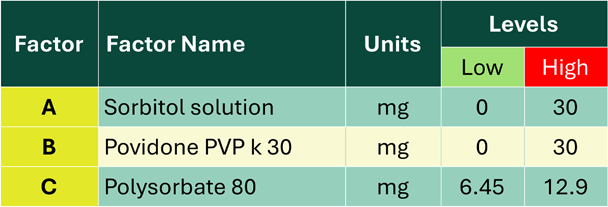
These ranges were selected based on initial development studies indicating their significant impact on drug absorption. The response variables and targets were set based on initial studies and RLD characterisation. ANOVA data analysis was performed, and the best-fit model was chosen based on statistical criteria.
f. Results and Design Space
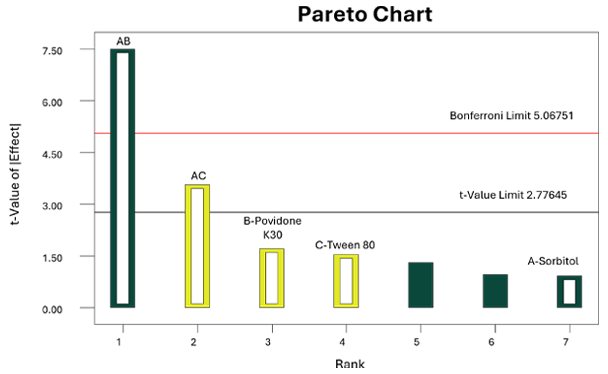
The DoE runs were executed randomly, and the results indicated that the interaction between Polysorbate 80 and Sorbitol significantly influenced the product's dissolution at 30 minutes, as shown in the Pareto chart. The overlay plot defined the design space where PVP K30 and Sorbitol at 12 mg of Polysorbate 80 met the dissolution requirements in 0.1N HCl and pH 3 Acetate buffer.
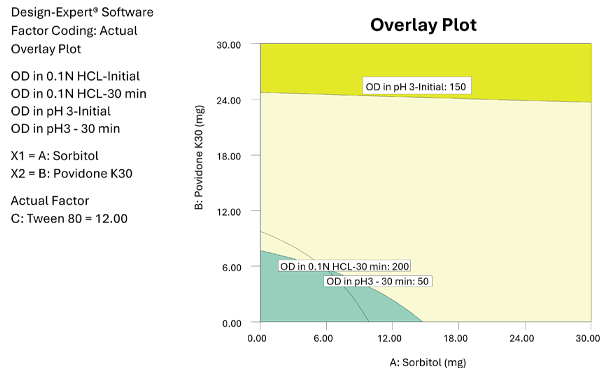
The yellow-coloured area defines the design space between the two factors PVP k30 and sorbitol at 12mg of polysorbate 80, which meet the dissolution requirement in 0.1N HCl and pH 3 Acetate buffer. The formulation batch was executed as an outcome of the above DoE, which met the desired product CQA and Bioequivalence with the reference product.
g. Summary
Strides' application of QbD and DoE principles in developing a softgel formulation for arthritis pain has resulted in a robust, bioequivalent product that meets all critical quality attributes. The methodical approach to formulation and process optimisation, risk assessment, and control strategy development exemplifies Strides' commitment to pharmaceutical innovation and quality, ensuring effective and safe patient outcomes.
Future Directions and Innovations
Strides is at the forefront of embracing emerging trends and technologies as the pharmaceutical landscape evolves. Advances such as personalised medicine, continuous manufacturing, and using artificial intelligence (AI) for predictive analytics are shaping the future of pharmaceutical development. Strides envision a future where these innovations are seamlessly integrated into its processes, enhancing its ability to deliver tailored, high-quality treatments quickly and efficiently.
Conclusion
Incorporating Quality by Design (QbD) and Design of Experiments (DoE) into pharmaceutical development is pivotal for ensuring high product quality, optimising processes, and achieving regulatory compliance. These methodologies provide a structured approach to identifying and controlling critical quality attributes and process parameters, significantly enhancing product consistency and reducing costs. As the pharmaceutical industry continues to evolve, fostering a continuous improvement and innovation culture remains crucial. Strides is committed to this path, leveraging QbD and DoE to maintain design excellence and uphold the highest quality standards in drug development.
References
https://www.ncbi.nlm.nih.gov/pmc/articles/PMC4070262/
https://www.scielo.br/j/bjps/a/zwwMpgN95HsPkzTG9B5FpWg/?lang=en
https://www.mt.com/in/en/home/applications/L1_AutoChem_Applications/L2_PAT/quality-by-design.html
https://www.sciencedirect.com/science/article/pii/S2772582023000293
https://pubmed.ncbi.nlm.nih.gov/28166428/
https://ieomsociety.org/proceedings/2022rome/207.pdf
https://www.mdpi.com/2227-9717/9/3/457
https://www.drugdiscoverytrends.com/small-molecule-trends-to-follow-in-2023/
https://www.mdpi.com/1999-4923/15/7/1916
Acknowledgements
We extend our gratitude to all contributors and key stakeholders, including our dedicated authors and the leadership team, for their unwavering support and invaluable contributions to the development of this article. Your expertise and commitment have been instrumental in bringing this work to fruition.