
Introduction
The recent cyberattack on Cencora disrupted major pharmaceutical firms, highlighting the industry's growing vulnerability.
With cybercriminals increasingly targeting intellectual property, patient data, and supply chains, the risks are greater than ever. While regulatory frameworks like HIPAA, GDPR, and ISO 27001/27701 set essential guidelines, companies must go beyond compliance.
As cyber threats escalate, they must take decisive action to protect their critical data and operations.
Cyber security in pharma industry now demands deeper integration across operations. Strides Pharma has risen to this challenge by implementing a proactive pharma cyber security risk assessment and digital safeguards that protect intellectual property, patient data, and supply chain integrity. To explore more about how the industry is evolving and the steps Strides Pharma has taken to stay ahead – read on!
Key Cybersecurity Risks in Pharma
1. Third-Party Vendor Risks
Pharma companies frequently work with external logistics firms, clinical research organisations, and IT service providers. A security breach at any third-party vendor can compromise sensitive data and disrupt operations, Cyber security risk assessments in pharma must include compliance checks and security audits for external partners.
2. Ransomware Attacks
Cybercriminals use ransomware to encrypt company data and demand payment for its release. These attacks can bring pharma production and research to a standstill. Companies need robust backup strategies and employee training to mitigate risks.
3. lot and IIoT Vulnerabilities
The pharma industry increasingly relies on the Internet of Things (107) and Industrial lot (lloT) for supply chain management and manufacturing. However, unsecured lot devices present entry points for cybercriminals. Strong encryption protocols, network monitoring, and regular patch updates are essential.
4. Phishing and Social Engineering Attacks
Phishing emails remain one of the most common cyber threats in pharma. Attackers trick employees into clicking malicious links, leading to credential theft or malware installation. Regular cybersecurity training and email security tools can help prevent such attacks.
5. Employee Negligence & Insider Threats
Human error remains a leading cause of data breaches. Employees using unauthorised applications, weak passwords, or failing to follow security protocols can expose sensitive information. Pharma companies must enforce strict access controls, data loss prevention (DLP) solutions, and continuous security awareness programs.
6. Mergers & Acquisitions (M&A) Risks
M&A activities present a high risk of data exposure. If security audits are not conducted properly during company integrations, attackers can exploit vulnerabilities. A cyber due diligence framework should be standard in all pharma mergers.
7. Technology Innovation & Governance Gaps
Emerging technologies in pharma, such as Al-driven drug discovery for supply chain security, bring new risks. Companies must establish strong governance policies to monitor security gaps in new digital initiatives.
Best Practices for Strengthening Cyber Security in Pharma
01. Implementing Robust Security Frameworks
Adopting internationally recognised security standards like ISO 27001 and ISO 27701 ensures a strong foundation for data security and privacy governance. For the cyber security in pharma industry, these frameworks ensure systematic control of sensitive information across clinical trials, manufacturing, and patient data. Additionally, strict compliance with GDPR, HIPAA, and FDA cybersecurity guidelines minimises legal risks and reinforces trust with stakeholders, ensuring that security measures align with regulatory expectations.
02. Enhancing Endpoint Security & Threat Monitoring
An essential component of cyber security in the pharma industry is proactive threat detection. Deploying Security Information and Event Management (SIEM) systems allows organisations to monitor network activity in real-time, quickly detecting anomalies and potential security breaches.
Complementing this with Extended Detection and Response (XDR) technology strengthens defences by identifying and containing threats before they escalate, reducing the likelihood of significant disruptions or data compromises.
03. Strengthening Supply Chain Security
Cyber threats can extend beyond internal systems, making supply chain security a critical component of a comprehensive cybersecurity strategy. Conducting thorough third-party risk assessments ensures suppliers adhere to stringent security protocols, minimising vulnerabilities introduced through external partnerships.
Additionally, blockchain technology enhances drug traceability and counterfeit prevention, providing a secure and transparent system for monitoring product integrity throughout the supply chain.

04. Training Employees to Combat Cyber Threats
Human error remains one of the biggest cybersecurity risks, making employee education a top priority. Conducting mandatory cybersecurity training helps staff recognise threats such as phishing attacks, social engineering tactics, and malware infiltration.
To reinforce safe practices, weekly security awareness emails serve as continuous reminders, ensuring that cybersecurity remains top of mind for employees and reducing the likelihood of accidental security breaches.
05. Performing Cyber Security Risk Assessments in Pharma
A strong cybersecurity framework requires continuous assessment and preparation. Performing annual cyber security risk assessments and penetration testing helps identify potential system vulnerabilities before they can be exploited. In parallel, having a well-defined business continuity plan ensures that organisations can respond swiftly to incidents.
Periodic drills test the effectiveness of incident response strategies, enabling teams to refine their approach and maintain operational resilience in the face of evolving threats to cyber security in the pharma industry.
Strides Pharma’s Commitment to Cybersecurity
Strides Pharma has established a comprehensive Information Security Policy managed by Arcolab Pvt. Ltd., a global capability centre specialising in life sciences consulting, technology, and business solutions.
Key data security initiatives by Strides Pharma:
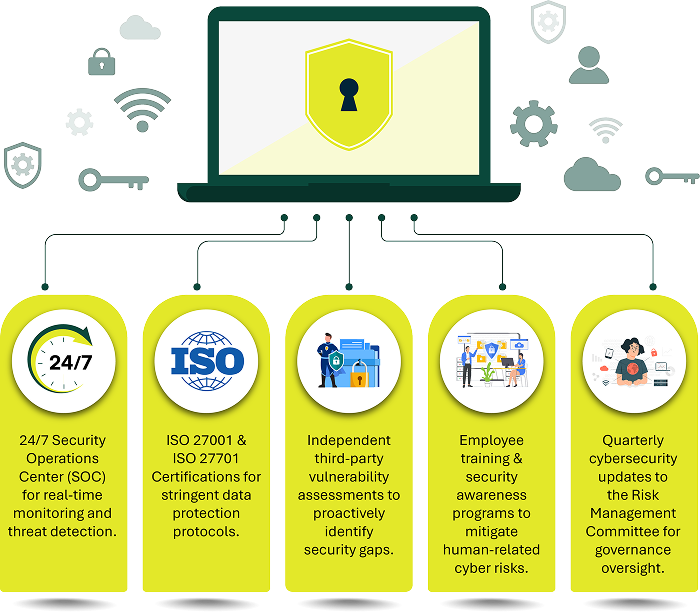
Strides Pharma’s Data Security Initiatives
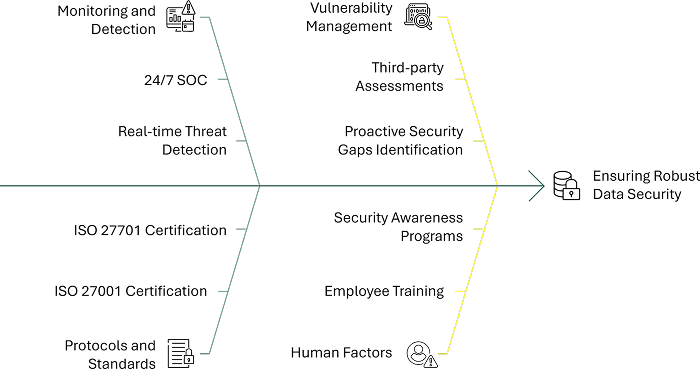
These measures ensure business continuity, regulatory compliance, and strong cyber resilience, reinforcing Strides Pharma’s commitment to data privacy and security.
The Future of Cybersecurity in Pharma
Today, it's not a matter of if a cyberattack will happen, but when. Cyber security in pharma industry must evolve from reactive to predictive, with pharma companies investing in next-generation safeguards.
At Strides, we prioritize next-generation security measures to stay ahead of evolving cyber threats. It may seem like overkill, but in cybersecurity, it's always better to be safe than sorry.
Looking ahead, proactive cyber security risk assessments will become a standard requirement, not an optional best practice. They not only protect intellectual property and patient data but also safeguard brand reputation and operational efficiency. For pharmaceutical leaders, cybersecurity is not JUST an IT issue—it’s a business imperative.
Conclusion
Pharma’s digital revolution comes with a price—more data, more threats, more risks. A single cyberattack can derail operations, compromise patient data, and cost millions. The only sustainable path forward is to embed cyber security in pharma strategies into every layer of operations. Build resilience, stay compliant, and make cybersecurity a core business strategy.
Key Takeaways:
• On average, pharmaceutical companies face 71 cyberattacks per year, with breaches costing $5.2 mn.
• Pharma supply chains rely on external vendors, making cybersecurity audits and compliance checks essential.
• Employees remain the weakest link, making training, multi-factor authentication, and endpoint security critical.
• Strides Pharma Leads with Strong Security Measures – With ISO 27001 & 27701 certifications, 24/7 SOC monitoring, and regular cybersecurity drills, Strides sets a benchmark for data protection.
• Advanced AI threat detection, blockchain for traceability, and quantum encryption are emerging trends for cyber resilience.
References
- • Cybersecurity in Pharma: Threats and Best Practices
- • How IoT Security Challenges Impact Pharmaceutical Manufacturing
- • https ://strides.com/pdf/sustainability/Strides_SR_Final.pdf
- • Cybersecurity Challenges in the Pharma Industry | Fortinet
- • Regulatory measures for cybersecurity in India’s pharmaceutical industry – Express Pharma