Introduction
Have you heard the saying, "As is, so shall it be"? It means that the quality of what you put into a process determines the quality of its outcome. This principle is the bedrock of pharmaceutical manufacturing.
Not only do substandard or contaminated raw materials directly impact product quality, safety, and brand integrity, but deficiencies in manufacturing processes, gaps in validation, and shortcomings in R&D can also have a significant negative effect.
Recent studies indicate that 25.4% of pharmaceutical product recalls were due to impurities, 40% were caused by microbial contamination, and 48.3% were related to sterility issues.
.png?alt=media&token=1c6210de-528e-4783-b707-ad905dbf7407)
That’s why analytical testing is the cornerstone of pharmaceutical development – it's essential for ensuring the safety and efficacy of every drug we bring to market," says Swamy KN, Head - Global Analytical Development & Services, a key leader in the R&D department at Strides Pharma.
In this blog, we explore the critical analytical attributes and testing processes that companies like Strides Pharma must implement during the research and development stages to ensure compliance with regulations and optimise product quality.
Starting at the beginning – with ‘cGMP’ (current Good Manufacturing Practices)
With numerous pharmaceutical manufacturing units worldwide, how does the global community regulate and ensure robust analytical and testing processes in medical product manufacturing? The World Health Organization (WHO) addressed this by introducing Good Manufacturing Practices (GMP) in 1968, which became part of the WHO Certification Scheme in 1969 to uphold the quality of pharmaceutical products globally.
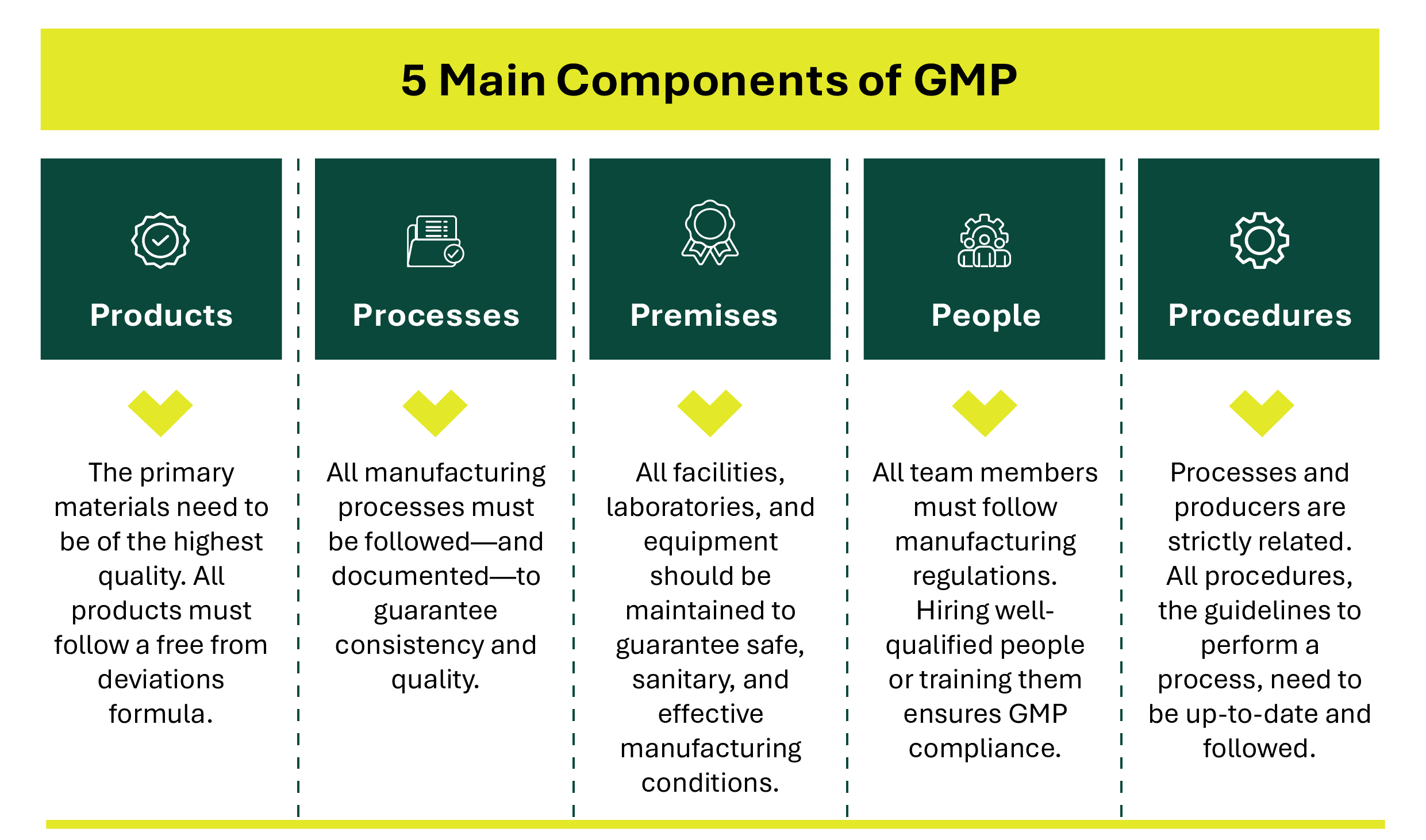
GMP, or ‘cGMP’ (current Good Manufacturing Practice), are critical quality assurance guidelines that ensure medicinal products are consistently produced and controlled to meet high-quality standards. It encompasses all aspects of production, including the validation, analysis, testing, and documentation of processes, as well as the suitability of R&D, personnel, premises, and materials in pharmaceutical and biological production. Additionally, GMP outlines legal responsibilities for distribution, contract manufacturing, and addressing product defects and complaints.
The effectiveness of cGMP is evident. Data shows that recalls due to cGMP breaches identified key issues: process control (18.10%), storage (15.7%), manufacturing (13.6%), and nitrosamine impurities (13.1%). So, what analytical and testing processes can be implemented during the research and manufacturing stages to curb these incidents? Let’s find out.

1. Identifying Particulates and Residues during Manufacturing
Detecting foreign particulates and residues is vital for maintaining the purity and safety of pharmaceutical products. Contaminants can originate from various sources, such as manufacturing equipment, packaging materials, or raw ingredients. They can pose significant risks, including adverse patient reactions, reduced drug efficacy, and, in the worst cases, a very expensive drug recall. Recent studies show that a lack of assurance in sterility primarily drove 48% of recalls.
-01.jpg?alt=media&token=b9cdeec8-3daf-4da9-a524-1d13742b6b65)
Hence, regulatory bodies like the FDA and EMA have established stringent particulate and residue testing guidelines.
At Strides Pharma, we use advanced techniques such as microscopy, spectroscopy, and chromatography to identify particulates and residues. These methods allow us to gain detailed insights into contaminants’ size, shape, and composition, enabling us to pinpoint their sources accurately and implement effective corrective actions to ensure product quality.
2. Extractables and Leachables Testing
Extractables are chemical compounds that can be extracted from pharmaceutical packaging or container systems when in the presence of a solvent, while leachables are compounds that leach into the drug product formulation from the container closure as a result of direct contact with the formulation.
Extractables and leachables can originate from packaging materials, container systems, and manufacturing equipment. These substances may cause toxicity, instability, and interactions within the drug, making their testing essential throughout the product's lifecycle.
Guidelines such as USP <1663> and ISO 10993 provide frameworks for extractable and leachables testing, ensuring the safety of pharmaceutical products.
At Strides Pharma, we employ various techniques to identify and quantify potentially harmful substances in pharmaceutical products. These include:
- Gas Chromatography-Mass Spectrometry (GC-MS): Separates and identifies volatile compounds in a sample, helping detect harmful impurities.
- Liquid Chromatography-Mass Spectrometry (LC-MS): Analyzes and identifies complex molecules in liquids, ensuring the purity and consistency of pharmaceutical products.
- Inductively Coupled Plasma Mass Spectrometry (ICP-MS): Detects trace metals and other elements, ensuring products are free from harmful contaminants.
Extractables and leachables testing goes beyond compliance; it’s an integral part of our commitment to innovation and patient safety,” says Swamy KN, Head - Global Analytical Development & Services, from Strides Pharma.

- Nuclear Magnetic Resonance (NMR) Spectroscopy provides detailed information about a compound's molecular structure, helping to verify the identity and purity of pharmaceutical substances.
They continue, "Through rigorous analysis of these compounds, we can fine-tune packaging materials and refine our manufacturing processes. This not only enhances product stability but also extends shelf life - which means that patients receive safer and more effective therapies. This is central to our quality strategy - helping us maintain the highest standards at every stage, from development to distribution.”
3. Particle Size and Shape Analysis
Particle size and shape are critical factors that influence drug dissolution, bioavailability, and stability. These characteristics are key in drug delivery and effectiveness in inhalation and injectable formulations.
Method verification and validation ensure reliable results with accurate particle size and shape analysis, while careful data interpretation aids informed decision-making in product development and quality control.
At Strides Pharma, we are committed to achieving precise particle size distribution. We use advanced equipment that plays a crucial role in R&D and large-scale manufacturing to maintain consistency and meet stringent industry standards.
Granulation Equipment:
Our granulation processes are supported by state-of-the-art Glatt Systems imported from Germany. These systems are integral to our R&D efforts and the manufacturing operations at our facility in Bangalore. By employing such advanced equipment, we can achieve uniform granulation, critical for ensuring consistent particle size distribution across batches. This consistency is essential for the efficacy and safety of our products.
Pelletisation and Coating Equipment:
For pelletisation and coating, we use the Wurster Coating Machine. This versatile piece of equipment is equipped with various bowl sizes—125CC, 800CC, and 500CC—allowing us to manufacture both small and large batch sizes efficiently. That is how we fine-tune the process to control the particle size distribution and coating uniformity, which are crucial for the stability and performance of our pharmaceutical products.
Regulatory standards like USP <429> and EP 2.9.31 require thorough particle size distribution testing to ensure consistency and quality, making compliance essential to meet industry standards.
Laser Diffraction Particle Size Analyzers:
Adopting the Malvern Mastersizer 3000 to analyze the particle size distribution (PSD) of our active pharmaceutical ingredients (APIs). This advanced laser diffraction particle size analyzer will provide us with precise and reliable data, ensuring consistent drug quality and efficacy. Its capability to handle both wet and dry dispersion methods makes it a versatile tool for our pharmaceutical applications
Conclusion:
In today’s highly regulated environment, every pharmaceutical organisation must have a well- qualified team of analytical and organic scientists, chemical engineers, and process chemists supported by a fully equipped QC department with the latest technology. This combination is vital to delivering products that meet specifications and satisfy regulatory authorities.
At Strides Pharma, every stage of our manufacturing process is meticulously controlled, monitored, and optimised. We ensure that our products meet the highest safety and efficacy benchmarks by leveraging advanced analytical instrumentation and adhering to rigorous quality standards.
Compliance isn't just about meeting regulations—it's about upholding the integrity of our processes and the trust of the patients who rely on our medications.
Key Takeaways
- Analytical testing ensures the safety and efficacy of pharmaceutical products. Strides Pharma leverages advanced testing methods such as microscopy, spectroscopy, and chromatography to maintain high-quality standards and prevent product recalls.
- Compliance with current Good Manufacturing Practices (cGMP) is essential to prevent process control failures, storage problems, and manufacturing errors. Strides Pharma adheres to these guidelines through rigorous process validation and monitoring, ensuring consistent product quality.
- Techniques like GC-MS, LC-MS, ICP-MS, and NMR identify and quantify harmful substances in pharmaceutical products. Strides Pharma uses these methods to ensure their products are impurities-free, enhancing safety and efficacy.
- Consistent particle size and shape ensure drug dissolution, bioavailability, and stability. Strides Pharma uses state-of-the-art granulation and coating equipment to maintain precise particle distribution, ensuring the efficacy and safety of its products.
- Strides Pharma’s focus on rigorous analysis, testing, and continuous process optimization demonstrates its commitment to innovation and patient safety. By investing in advanced equipment and adhering to stringent quality standards, we ensure that our products meet the highest regulatory benchmarks and provide safe, effective therapies to patients worldwide.
References:
- A Review Article on Pharmaceutical Analysis of Pharmaceutical Industry According to Pharmacopoeias
- A retrospective regulatory analysis of FDA recalls carried out by pharmaceutical companies from 2012 to 2023 - ScienceDirect
- Good manufacturing practices for medicinal products for human use - PMC
- Health products policy and standards - cGMP for WHO
- (PDF) ANALYTICAL METHOD DEVELOPMENT AND VALIDATION: A REVIEW
- HPLC Method Development and Validation for Pharmaceutical Analysis
- Pharma 4.0: The Future of Pharmaceutical Manufacturing